
Put two silver Porsches beside each other and the difference can be surprisingly noticeable. Polar Silver Metallic tends toward a cooler, blue-tinted appearance. Arctic Silver Metallic reads more like a neutral, bright silver, and can look slightly warmer beside Polar.
Both let the shape of a 911 do much of the talking. The distinction is in the undertone—and in how each finish responds to its surroundings.
Polar Silver: silver with a blue cast
Polar’s appeal is its hint of color. It can look almost pale blue in some conditions, then much closer to straightforward silver in others. That cooler character is the useful distinction to keep in mind, rather than assuming it will always be darker or lighter than Arctic. Paint supplier PaintScratch describes the blue undertone in its own Polar Silver reference.
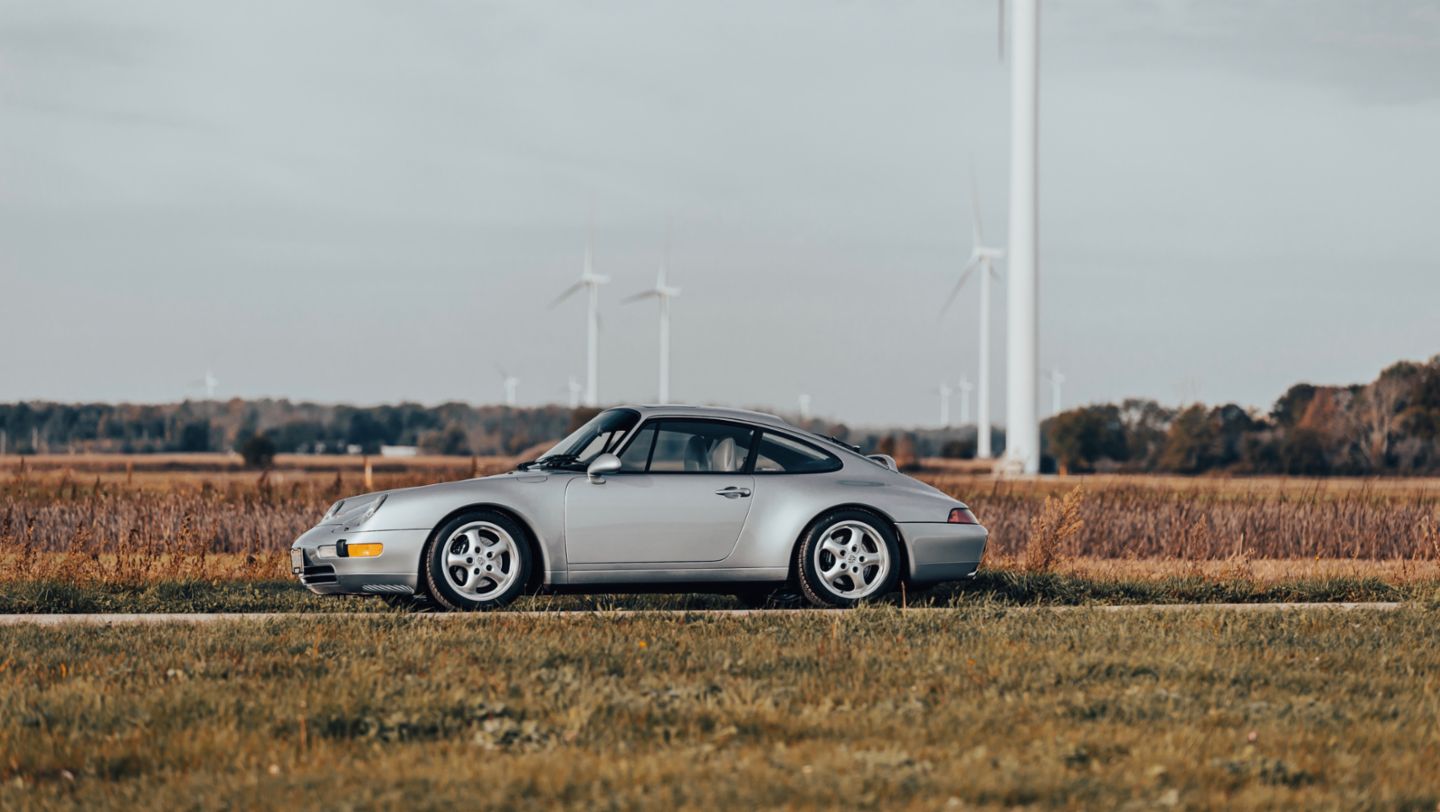
It is very much part of the air-cooled Porsche story. Porsche’s 1996 993 color brochure lists Polar Silver Metallic under the ordering code A8. The Carrera shown here is the Polar Silver 993 restored by Pfaff Porsche and identified by Porsche in its coverage of the Canadian Classic Restoration Competition.
Arctic Silver: a cleaner, more neutral impression
Arctic has less of that blue emphasis. Its appeal is the familiar silver-metallic look: bright highlights, clear reflections and a finish that lets the body’s curves stand out. Describing it as slightly warmer than Polar is a comparison between the two, rather than a suggestion that Arctic is a gold or champagne color. PaintScratch’s Arctic reference also describes its relatively warmer character.
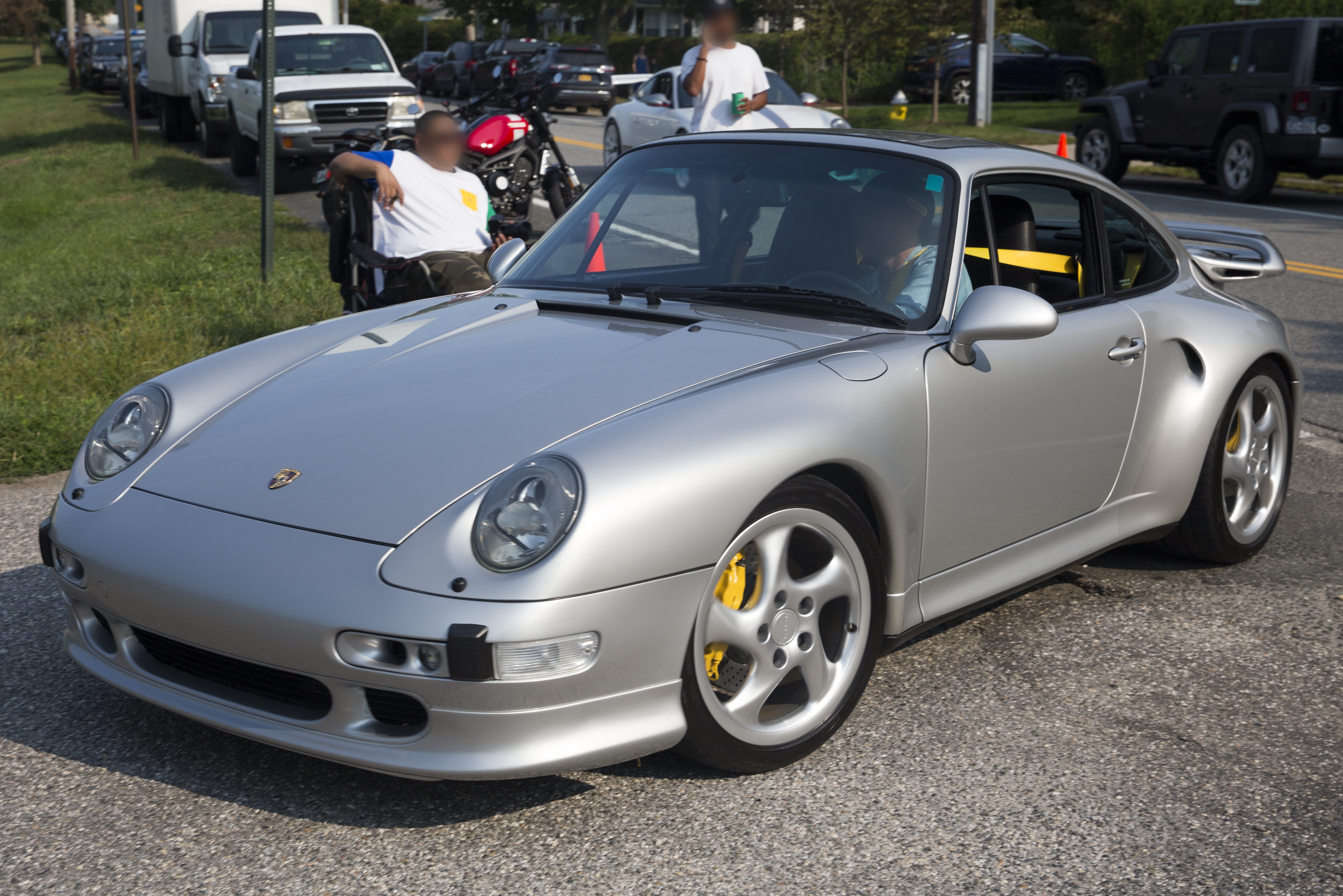
Arctic belongs to the 993 story as well. Porsche’s 1997 color brochure lists Arctic Silver Metallic as X1, and Porsche identifies Arctic Silver in its history of Targa colors. The 1997 993 Turbo S pictured here is identified as Arctic Silver Metallic by photographer Mr.choppers in the original photograph’s description. These are two distinct Porsche finishes, not two names for the same silver.
The photographs are a guide, not a paint sample
The Polar Silver photograph comes from Porsche Newsroom, which identifies the car’s finish. The Arctic Silver photograph is by Mr.choppers, who identifies the finish in the original Wikimedia Commons description. They show different cars, viewpoints and outdoor lighting: a Carrera in profile and a Turbo S from a front three-quarter angle. We have not recolored either image.
That matters with silver. Reflections from sky, trees or studio lighting can change the apparent tint; camera white balance, editing and your screen add more variables. Even Porsche’s period color brochures caution that their reproduced samples can differ from the actual finishes. A photograph can help explain the character of a color, but it cannot establish an exact match.
Buying a silver Porsche? Check the code.
Do not rely on a listing that simply says “silver.” Ask for the factory paint code and the car’s specification records. Common references include 92M for Polar Silver and 92U for Arctic Silver; period ordering codes such as A8 and X1 are a different type of identifier. Other references exist, so a Porsche specialist or paint supplier should interpret the actual code on the particular car.
A factory code tells you the specified finish. It does not prove that the car still wears its original paint. If originality matters, have a specialist inspect the finish and repair history. For a repair, confirm the code and have the color matched to the car rather than ordering from the name alone.
Which would we choose?
For a silver that carries a little extra color, Polar is the appealing choice. For a more neutral silver appearance, Arctic is hard to argue with. We would want to see both in daylight before deciding.
The better question is the personal one: which silver would you want to see in your garage?