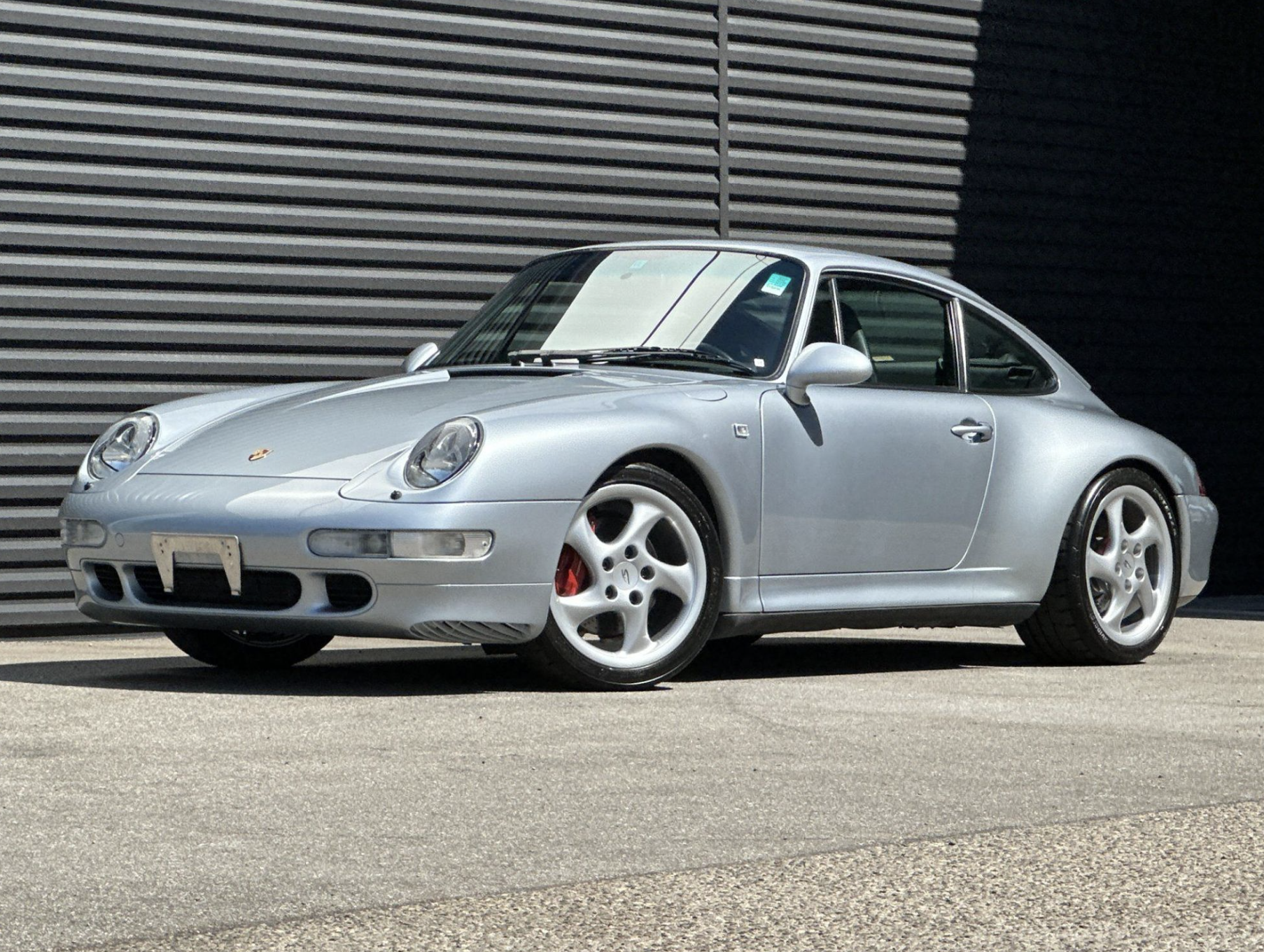
The Porsche 993 has enough reasons to be celebrated without adding a rescue mission. It was the final air-cooled 911, a substantial development of a familiar idea, and a car whose place in the enthusiast imagination has endured. Yet another claim follows it: this was the 911 that saved Porsche.
There is a real basis for that claim, but the complete turnaround involved more than the 993. Porsche's own historical accounts describe its importance during the company's financial crisis. Those same accounts give the Boxster, the 996 and changes in the way Porsche built cars essential roles in the recovery.
Why the claim deserves to be taken seriously
Porsche is unusually direct about the 993's burden. In its retrospective marking the model's thirtieth anniversary, the company writes that at times the 993 had to “carry the business single-handedly.” It describes a difficult financial period as the older transaxle models approached the end of their lives. That is strong support for the car's significance, from Porsche itself. Porsche's 993 anniversary history.
The timing matters. The 993 entered production in 1993. The new, less expensive mid-engined car that would broaden Porsche's customer base was still a concept. The company needed a desirable 911 it could actually sell while its next generation of products took shape.
In that sense, “saved Porsche” is understandable shorthand. The 993 helped sustain the business through a vulnerable interval. Claiming it alone solved Porsche's underlying problems goes further than the evidence supports.
A convincing car at a difficult moment
The 993 made progress visible without abandoning the 911's familiar outline. Its smoother bodywork accompanied a new multi-link rear suspension, while the Carrera paired its air-cooled flat-six with a six-speed manual or optional Tiptronic. Porsche records 68,881 examples across the generation before production ended in 1998. The factory's generation history describes the engineering and production run.
For someone buying new, the attraction was a developed, contemporary 911. The “last air-cooled” status that now dominates advertisements acquired its full meaning with the arrival of the successor. It is easy to read today's collector enthusiasm backward into a period when Porsche still had to convince customers to order a new car.
That difference gives the 993's story more weight. Its immediate job was to work as a product, rather than simply become a future collectible.
The problem was bigger than one model
In Porsche's interviews with the people behind the Boxster, former development chief Horst Marchart describes the pressure of declining sales, currency movements and the expense of supporting several distinct model lines. The company needed a different relationship between development cost, production cost and sales volume. Porsche's account of the Boxster project.
A successful 911 could help pay the bills and maintain the brand's appeal. It could not, by itself, make every other program cheaper to develop. Nor does a production total reveal the profit earned on each car. This is the point at which an enthusiast's story about a great sports car has to become a business story as well.
The Boxster opened another door
The Boxster concept appeared at the Detroit show in January 1993, the same calendar year the 993 arrived. The production Boxster followed in 1996. Porsche's history of the concept traces that transition.
Crucially, the Boxster project offered a route to customers below the 911's price level. It was developed alongside the next 911, with shared components intended to spread costs across both cars. Marchart's recollection identifies a target of cutting the new cars' production costs by 30 percent; that was a development objective, not a number to assume the 993 itself achieved. The development team's retrospective explains the plan.
The two products therefore had complementary tasks. The 993 kept Porsche's established sports-car proposition current. The Boxster helped make a broader business possible.
The 996 was part of the answer
The water-cooled 996 arrived in 1997. Porsche's twenty-fifth-anniversary account explicitly credits it, together with the Boxster, with securing the company's continued independence. Interviews with its development and design leaders explain that sharing the front body structure and much of the interior with the Boxster was fundamental to the program. Porsche's 996 development history.
For collectors, the 993 and 996 are often placed on opposite sides of a cultural divide: air cooling and water cooling, the familiar face and the controversial one. The company's history puts them in the same recovery story.
Liking the 993 more does not require minimizing what followed it. The old architecture had to earn its keep during the transition; the new architecture had to support Porsche's future.
The less photogenic part: changing the company
Porsche's later account of the Cayenne's origins looks back at another essential element of the 1990s recovery: management and production reform. It describes Wendelin Wiedeking taking the lead, streamlining production and reducing layers of hierarchy. The Boxster was part of that effort to put the business on a stronger footing. Porsche's account of the restructuring.
Those changes rarely make as compelling a photograph as a 993 Turbo. They matter because selling an admired car and building a sustainable company are related but different achievements. A new model can attract orders; the organization must be able to develop, assemble and support it at a cost that leaves room for the next one.
The Cayenne belonged to a later expansion chapter. Bringing it into the discussion should not blur the chronology of the early-1990s crisis and the products that bridged it.
So, did the 993 save Porsche?
It helped carry Porsche through the crisis. It did not complete the rescue alone. That is the most defensible reading of the company's own histories.
The 993 supplied a compelling 911 during a period when Porsche badly needed one. The Boxster expanded the opportunity, the 996 shared the economics of the next generation, and changes inside the factory made those plans more viable. Each addressed a different part of the problem.
For a present-day owner, that qualified version is more interesting than a slogan. The 993 occupies a genuine turning point: the final development of one engineering tradition, sold while Porsche was preparing the system that would replace it.
Its history is a reason to understand the car, not a guarantee of appreciation or a substitute for examining a particular example. Explore our Porsche 993 guide, compare the models and variants, or read why a Tiptronic 911 can deserve a place on an enthusiast's shortlist.